
From asset tracking to asset intelligence the category shift

Dhananjay Chandra Kulal
Author
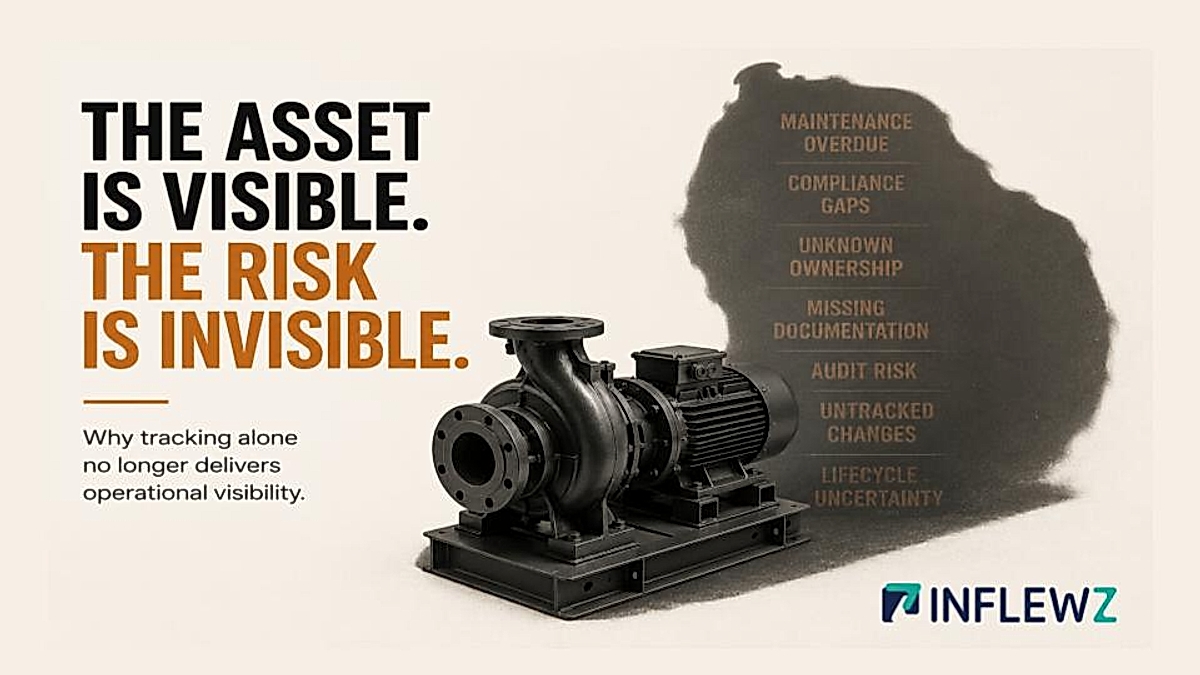
Asset tracking was once considered the finish line. Today, it is the starting point.
For many operations teams, the objective has been straightforward: know where assets are. Deploy tags. Scan QR codes. Install trackers. Build inventories. Create a register. Generate reports.
The problem is that location alone rarely answers the questions operations leaders are actually trying to solve. An Operations Director managing thousands of assets across facilities rarely asks, "Where is this asset?" They ask:
- Is it operational?
- Is maintenance overdue?
- Is calibration valid?
- Is it being utilized?
- Is it becoming a compliance risk?
- Will it fail soon?
- Who is responsible for it?
- Can I prove its history during an audit?
The shift from asset tracking to asset intelligence happens when organizations move from collecting asset data to generating operational context.
This article defines the emerging category of asset intelligence, explains why tracking is no longer sufficient, and introduces the five-layer model that separates intelligent asset operations from basic tracking systems.
The problem: tracking creates visibility, but not understanding
The most expensive operational decisions are rarely caused by missing location data. They are caused by missing context.
A manufacturing plant may know exactly where a compressor is located while remaining unaware that its maintenance schedule is overdue. A hospital may know where an infusion pump sits while lacking visibility into calibration status or service history. A warehouse may know which dock a forklift occupies but have no understanding of utilization patterns, downtime trends, or inspection compliance.
The asset is visible, The risk is invisible.
This distinction matters because most organizations already possess some form of tracking capability. QR labels, spreadsheets, ERP asset modules, RFID deployments, and IoT sensors have become increasingly common across industries. Yet operational leaders continue to struggle with downtime, audit preparation, asset loss, maintenance backlogs, and fragmented accountability.
The reason is simple. Tracking answers one question. Operations require answers to dozens.
Consider a common audit scenario.
An auditor requests maintenance history, calibration certificates, ownership records, inspection logs, and service evidence for a critical asset. A tracking system may confirm where the asset sits. Operations teams must still gather evidence from emails, spreadsheets, paper logs, vendor portals, shared drives, and maintenance systems. The problem is not asset visibility. The problem is fragmented asset intelligence.
This is why many organizations experience what appears to be operational visibility while still operating with significant uncertainty. They know where assets are. They do not know what those assets mean.
The reframe: Asset intelligence is not a better tracking system
The industry often frames progress as better tracking technology. The more useful framing is different.
Asset intelligence is not an evolution of tracking technology. It is an evolution of operational understanding.
This distinction changes how organizations evaluate systems. Many technology projects begin with questions such as:
- Should we use QR codes?
- Should we deploy RFID?
- Should we install IoT sensors?
- Should we implement GPS tracking?
These are important questions. They are not strategic questions. The strategic question is:
What operational decisions become possible once asset data is connected, contextualized, and continuously maintained?
Tracking technologies are simply data collection mechanisms. Asset intelligence is the operational layer built on top of them. Think about a modern aircraft. Thousands of sensors continuously generate data. No airline creates value from sensor data itself. Value comes from understanding what the data indicates about safety, maintenance, performance, utilization, compliance, and future risk. The same principle applies across manufacturing plants, hospitals, logistics operations, utilities, campuses, and public infrastructure.
Organizations increasingly need systems that answer:
- What is happening?
- Why is it happening?
- What action is required?
- What risk exists if no action is taken?
These questions sit beyond tracking. They sit within asset intelligence.
This is why the category is expanding beyond traditional asset management and tracking platforms. Operations leaders increasingly require a connected operational system that combines location, maintenance, compliance, documentation, condition monitoring, ownership, and lifecycle data into one operational view. The outcome is not better asset records. The outcome is better decisions.
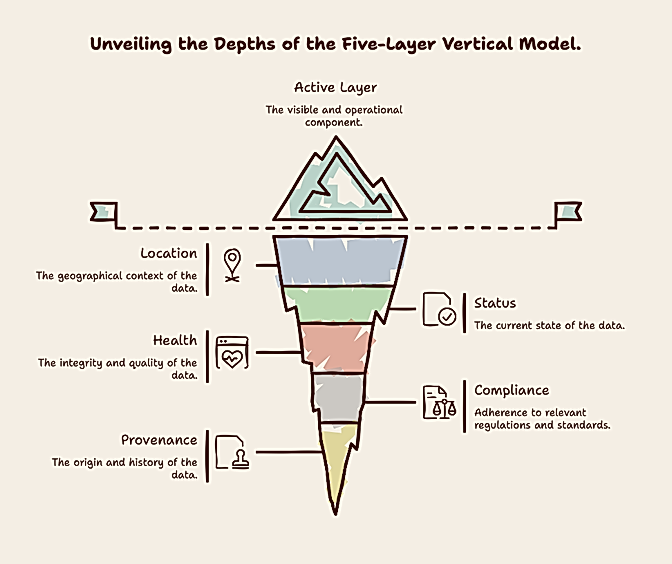
The five-layer asset intelligence model
Organizations rarely become asset-intelligent overnight. They typically progress through five distinct layers. Each layer increases operational visibility and decision quality.
Layer 1: Location
The foundation. This layer answers: "Where is the asset?"
Capabilities include:
- Asset tagging
- QR identification
- RFID tracking
- GPS monitoring
- Inventory visibility
Most asset programs begin here. The problem is that location alone produces limited operational value. Knowing where an asset exists does not indicate readiness, risk, utilization, or compliance.
Example:
A warehouse identifies the location of every forklift across five facilities. Visibility improves. Operational decisions remain limited.
Layer 2: Status
The second layer answers: "What is the asset doing right now?"
Capabilities include:
- Active vs inactive
- In service vs out of service
- Available vs assigned
- Operational readiness
- Ownership assignment
Status introduces context. Instead of merely locating an asset, operations teams begin understanding whether it can perform its intended function.
Example:
A hospital identifies that 37 infusion pumps exist and determines that only 29 are immediately deployable. That distinction affects patient operations.
Layer 3: Health
The third layer answers: "What condition is the asset in?"
Capabilities include:
- Maintenance history
- Inspection records
- Runtime monitoring
- Condition monitoring
- Predictive indicators
This is where many organizations begin preventing downtime rather than reacting to it.
Example:
A manufacturing facility connects maintenance history and condition data to identify equipment showing elevated failure risk before production disruption occurs. Health transforms asset visibility into operational foresight.
Layer 4: Compliance
The fourth layer answers: "Can we prove operational readiness and regulatory compliance?"
Capabilities include:
- Calibration records
- Inspection evidence
- Certificate management
- Audit trails
- Approval workflows
Many organizations underestimate this layer until an audit occurs. Compliance intelligence reduces audit preparation effort while strengthening operational governance.
Example:
A diagnostic laboratory can instantly produce calibration certificates, maintenance records, and inspection histories during an accreditation review. The audit becomes evidence retrieval rather than evidence creation.
Layer 5: Provenance
The highest layer answers: "What is the complete story of this asset?"
Capabilities include:
- Lifecycle history
- Service records
- Ownership changes
- Verification records
- Chain of custody
- Product authenticity
This layer becomes increasingly important for regulated industries, public infrastructure, healthcare, manufacturing, and product verification. Provenance creates trust. Organizations can understand not only what an asset is today but how it arrived there.
This is also where initiatives such as Verified by Inflewz become possible because authenticity depends on trusted provenance records.
The complete model
- Location — Where is it?
- Status — What is it doing?
- Health — What condition is it in?
- Compliance — Can we prove readiness?
- Provenance — What is its complete history?
Asset intelligence emerges when all five layers operate together.
What asset intelligence changes operationally
The shift sounds conceptual. The outcomes are practical. Organizations moving beyond tracking typically see improvements across four operational areas.
- Better decisions: Teams spend less time gathering information and more time acting on it. Operational meetings become focused on decisions rather than status discovery.
- Lower downtime: Maintenance teams identify risk earlier. Work orders become proactive rather than reactive. Asset health becomes visible before failures occur.
- Faster audits: Compliance evidence already exists inside operational workflows. Audit preparation becomes a retrieval exercise rather than a documentation project.
- Stronger accountability: Ownership becomes visible. Actions become traceable. Operational responsibilities become measurable. The result is not simply a cleaner asset register. The result is greater operational visibility.
What asset intelligence is not
Several common anti-patterns create the appearance of intelligence without delivering it. A spreadsheet containing asset locations is not asset intelligence. A QR code linking to a static page is not asset intelligence. A maintenance system disconnected from compliance records is not asset intelligence. An IoT deployment without operational workflows is not asset intelligence. Each produces data.None produce connected operational understanding.
Organizations often invest heavily in collection mechanisms while neglecting the systems that convert information into decisions.Asset intelligence begins when operational context becomes more valuable than raw asset data.
The future category: operational visibility
The long-term destination is not better tracking. It is operational visibility. Asset intelligence serves as the bridge. As organizations connect asset location, health, compliance, maintenance, ownership, and provenance into a single operational system, assets stop functioning as isolated records.They become operational signals.
Every maintenance action, inspection, calibration event, utilization change, compliance activity, and lifecycle update contributes to a continuously improving operational picture. This is the category shift now emerging across manufacturing, healthcare, logistics, utilities, government, and infrastructure operations. Tracking remains important. It simply no longer defines the category.
The organizations creating the greatest operational advantage are not those that know where assets are. They are the organizations that understand what those assets mean.
If your team is still piecing asset operations together with spreadsheets, WhatsApp, and paper logs, a 30-minute technical walkthrough is the fastest way to see what changes.
Works with operations leaders across manufacturing, healthcare, logistics, utilities, and public infrastructure to improve operational visibility, maintenance performance, and audit readiness.